
What are we really building for?
October 2025

When I was in high school, I started a business where I sold painted rocks. Yes, actual rocks. A couple of friends and I would sit around plastic folding tables in a garage and paint rocks with our school club logos. We then encased them in resin, wrapped them in small cube boxes, and sold them as keepsakes during competitions and performances. We made a couple grand and donated it to an elementary school in an underserved community.
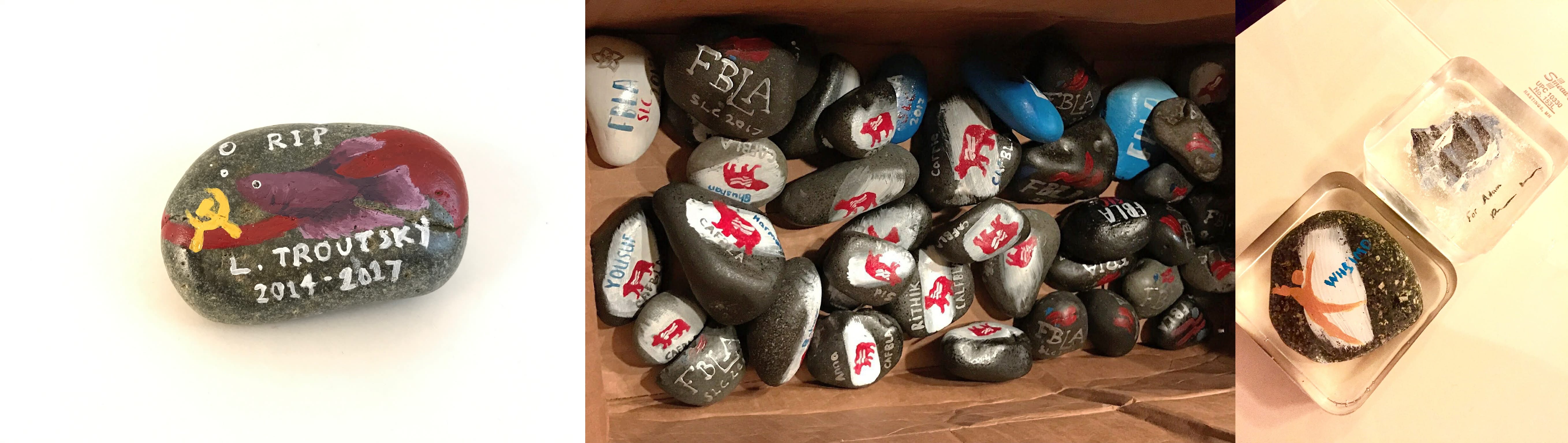
One weekend, we visited that elementary school and spent the afternoon painting rocks with the kids. We didn’t sell those, but I remember having the thought: what if these kids painted their own rocks and sold them to their nearby high school? Could they raise money for their own school programs without having to rely on donations?
Back at school, I hauled around my box of rocks and wrestled with the idea of creating businesses that achieved some kind of social impact but were backed by a sustainable business model. With that in mind, I went to the library, sauntered down the aisles of books, and found a light blue hard cover: “Creating a World Without Poverty” by Muhammad Yunus.
Most books that I have read in my life, to be honest, I don’t remember much from. But one idea from Yunus’s book really stuck with me: the concept of a “social business” or a company built not to maximize profits, but to solve a social problem in a financially sustainable way.
I specifically remember Yunus describing his 2006 partnership with French dairy brand Danone. Together, they started a corporation to create yogurt products in Bangladesh that were pegged at 10 cents per serving and high in nutrition for low-income families. To keep the price low and quality high, they structured the business so that the initial shareholders only got repaid for their investment and any additional profit was invested back into R&D at the company. While the business didn’t scale globally the way some had hoped, they did reach their goal of bringing the high nutrition, low cost yogurt offering to Bangladesh. And what I respect most is that they started with a clear goal to help low-income Bangladeshi families access more nutritional foods and then creatively found a way to get the product in people’s hands.
After high school, I continued pursuing my curiosity of creating sustained social impact. During my freshman year at Duke, I went through a whirlwind of club activity fairs and interviews and found myself in an effective altruism fellowship. It’s funny how EA has since become associated with Sam Bankman-Fried and the AI safety community, but at its core, I loved the idea of being empirical about where and how we dedicate our energy and resources to improve the world.
One Sunday morning before my fellowship meeting, I was sitting in the East campus dining hall, swirling a spoon around some oatmeal and reading a paper print out of “Prospecting for Gold”. This is another one of the few pieces of writing that has really stuck with me years later. In particular, the article proposes a framework for selecting which problems to work on to have the greatest impact on people—i.e. problems that have the largest scale, are uncrowded, and are tractable or easy to make progress in.
This framework made a lot of sense to me. There are so many things we could do to help the world, decreasing poverty, fighting climate change, preventing existential risks. If we are choosing to dedicate our life towards something, we should be thoughtful about which area has the biggest opportunity for improving life.
Between my EA learnings, I was drawn to every organization related to entrepreneurship and technology in the light of creating scalable impact. I lived in a house of entrepreneurial people (largely the hacker house kind of entrepreneur), became a university scout for a venture fund, interned at a venture studio and 3 other early stage startups, and spent my hours outside of class cold emailing great founders and investors to get feedback on my projects. Similar to the criteria I learned from EA for vetting the best ways to do good, I learned similar criteria for vetting the best venture backable business opportunities—i.e. opportunities that had a large market, few competitors, and low R&D costs to get started.
By my senior year, I decided I wanted to be a customer-facing, product engineer at an early stage startup creating AI for enterprise. And that is exactly what I became.
It’s been two years. I’ve fully immersed myself in different startup/venture circles in SF, tracked all the AI companies across every vertical, wrote personal memos and predictions about them, considered being a founding engineer at several, and even considered taking venture money to found one myself.
But as I take time to reflect on what I want to work on and analyze what AI startups are being built right now (i.e. foundation models, AI native software for every vertical and consumer AI characters and content), I wonder if I’ve lost my original dedication to build what I believe people need in the guise of finding a great opportunity, the great opportunity with the large market, low competition, and high tractability.
When in reality, there are a lot of the problems we need solutions to right now that are large scale but may not be solved so simply with a piece a software that generalizes across populations. They might be problems that are extremely obvious and are being worked on by many people. And they might not be solved with little time and resources.
Isn’t it our job as creators to fight through all these complexities, to be creative!, and to make incredible solutions for people? Is it really so exciting that there are brilliant people finding opportunities that squarely fit the large scale, low competition, high tractability framework? Or should it be exciting that there are brilliant people finding problems that really matters to us and are committed to doing whatever it takes for us to experience better in life?
I may come off naive here by not recognizing some of the incredible work we have done around software, bringing health care online, real time personalized question answering, and instant code generation. I think these are extremely beneficial to people.
But looking back at where my intentions were in high school— the rocks, Yunus, and the idea of being creative to offer something people need—and where I am now and the people and work I’m surrounded by, I worry that if we keep optimizing for great business opportunities, we will wake up in 2050 and see that we were able to create big businesses, used by many people.
But will we really feel that our lives are so much better?
If you made it this far, thank you for reading my October monologue. If you have questions, opinions, experiences about any of these topics, I would love more than to discuss! That’s why I write after all :) You can find me @jjanezhang on X.
A special shoutout to my friend Luke for being a great friend.
Other topics I thought about but didn’t write about:
Longing for “my old self”.
I like to believe that I can write my way out of my problems.
The responsibility we have a producers.
Read the original motivation for my this writing project here:
Sharing My Internal Monologue

I’m not naturally one to relive the past. Moments, even ones I remember feeling strongly about, feel so far from me even just a couple of weeks after they occur.
great piece, complex challenges require thoughtful people coming together!!
Brilliant. This is such a critical point about building for impact over just profit. Totally agree with you, its so important.